


The Economics of Metal Recovery in Waste-to-Energy Plants: Turning Bottom Ash into Profit
For decades, the financial model of a Waste-to-Energy (WtE) plant was simple: charge a gate fee for accepting municipal solid waste (MSW) and generate revenue by selling electricity back to the grid. However, as operational costs rise and environmental regulations tighten globally, this traditional dual-revenue model is no longer enough to guarantee high profitability.
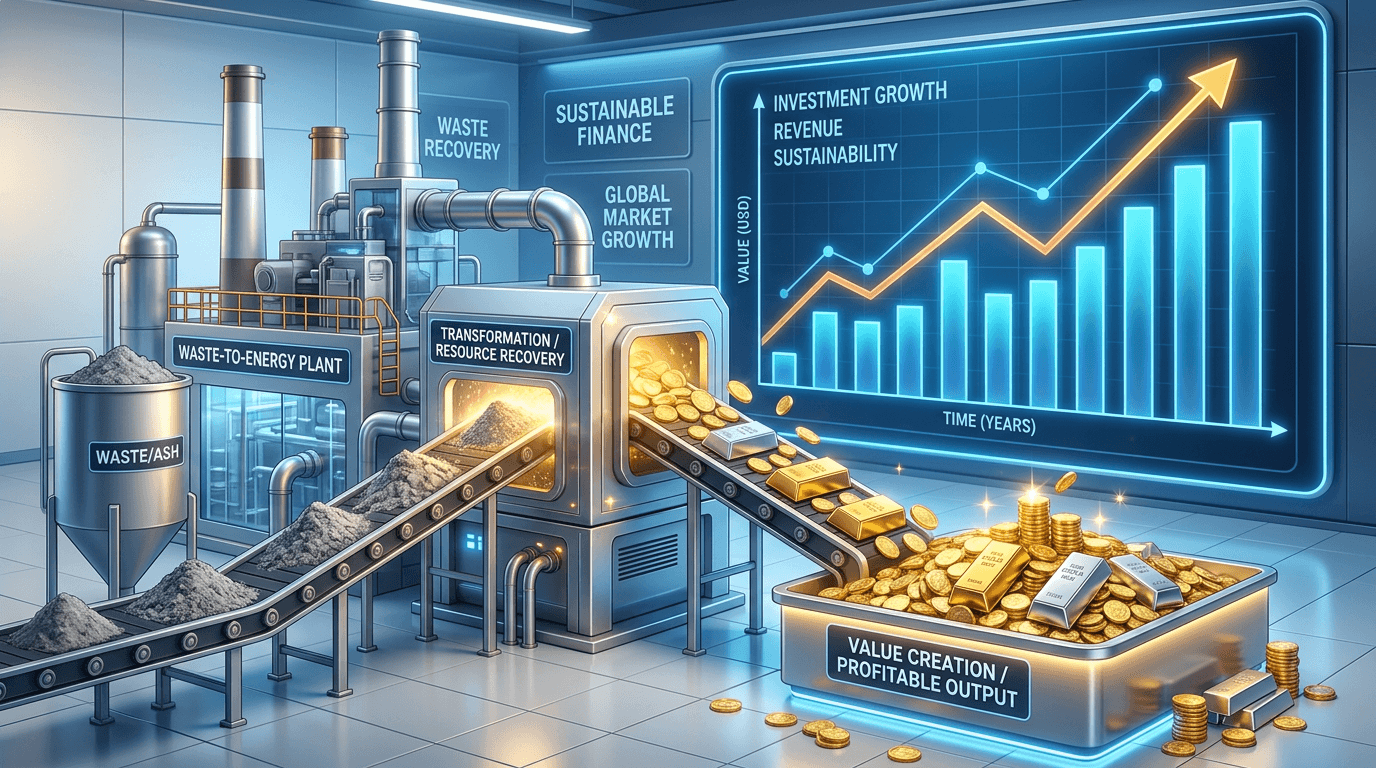
Enter the "third revenue stream": Metal recovery from Incineration Bottom Ash (IBA). Following the incineration process, approximately 20% to 30% of the original MSW weight remains as bottom ash. Hidden within this grey, unassuming slag is a literal "urban mine" consisting of ferrous metals, highly valuable non-ferrous metals (ZORBA), trace precious metals, and reusable mineral aggregates.
In this deep-dive economic analysis, we will explore the true financial potential of modern IBA sorting. We will break down the commodity value of recovered metals, analyze the massive savings on landfill taxes, and explain how upgrading your facility with a Turnkey IBA Sorting Solution can deliver a full Return on Investment (ROI) in as little as 12 to 18 months.
1. The Composition of Wealth: What is Actually in Bottom Ash?
To understand the economics, we must first understand the raw material. While exact compositions vary depending on the local municipality's recycling habits, a standard ton of raw Incineration Bottom Ash typically contains:
- •Ferrous Metals (7% - 12%): Iron scrap, steel wire, tin cans, and rebar. While lower in value per ton, the sheer volume provides a steady, reliable baseline income.
- •Non-Ferrous Metals (1% - 3%): Primarily Aluminum and Copper, often sold as a mixed fraction known as ZORBA. This is where the vast majority of the profit is generated.
- •Precious Metals (Trace amounts): Gold, Silver, and Palladium from incinerated electronic waste (e-waste). Though minuscule in weight, their high market value makes them highly lucrative if your plant utilizes precision Gravity Separation equipment.
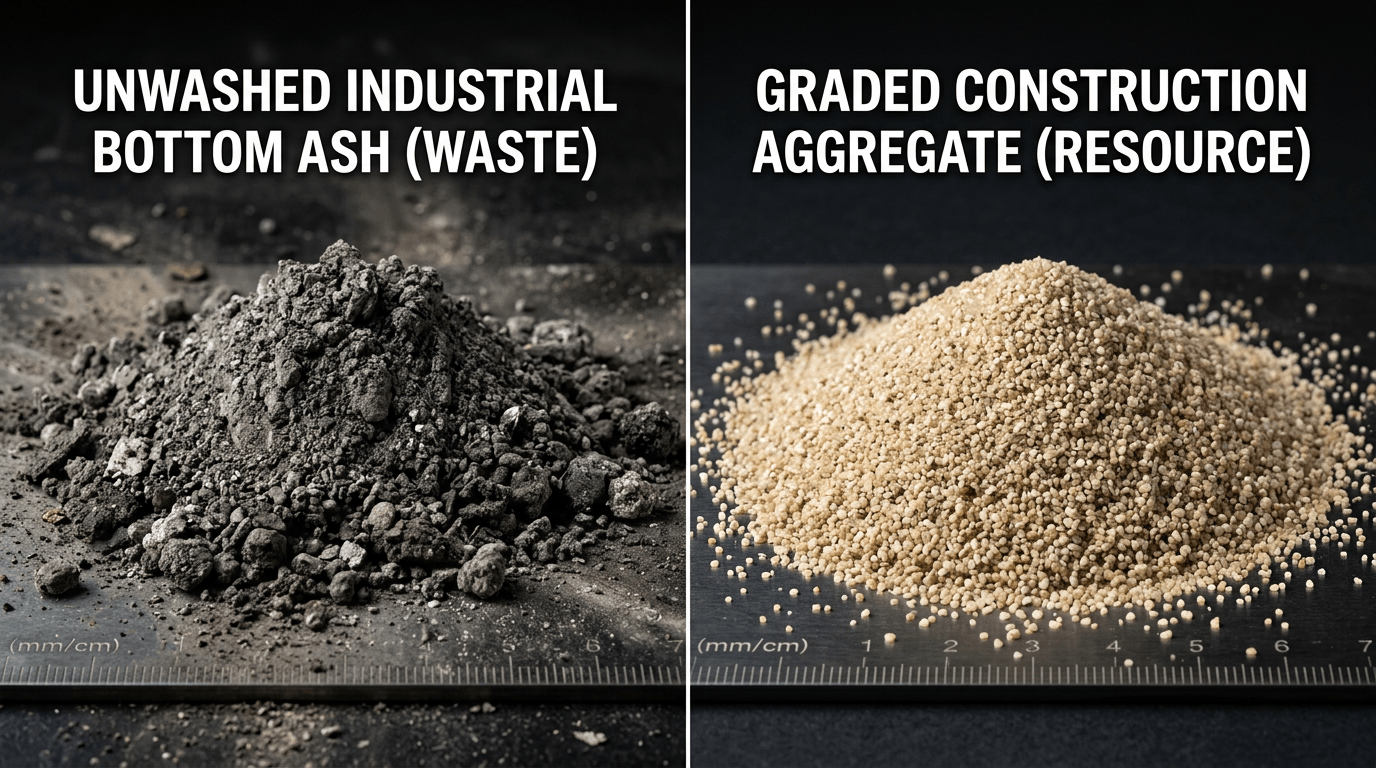
- •Mineral Aggregates (80% - 85%): Glass, ceramics, stones, and melted slag. When properly washed and graded, this becomes saleable construction sand.
2. Calculating the Commodity Revenue (The Upside)
Let’s look at a hypothetical economic model for a mid-sized WtE plant generating 100,000 tons of IBA annually (roughly translating to processing 400,000 to 500,000 tons of MSW).
Note: Commodity prices fluctuate daily. The following figures are conservative estimates used for illustrative ROI modeling.
| Material Recovered | Estimated Recovery Rate | Annual Tonnage (from 100k tons IBA) | Estimated Value per Ton (USD) | Estimated Annual Revenue (USD) |
|---|---|---|---|---|
| Ferrous Scrap | 10% | 10,000 Tons | $250 | $2,500,000 |
| Non-Ferrous (ZORBA / Aluminum) | 1.5% | 1,500 Tons | $1,400 | $2,100,000 |
| Heavy Non-Ferrous (Copper/Brass) | 0.3% | 300 Tons | $4,500 | $1,350,000 |
| Total Gross Potential Revenue: | $5,950,000 / Year | |||
As the table demonstrates, effectively recovering non-ferrous metals using advanced Eddy Current Separators generates massive revenue. However, without proper primary sizing via Trommel Screens and aggressive Slag Crushers to liberate the metal from the ceramic clinker, a plant might only recover half of these projected amounts.
3. Landfill Tax Savings (The Hidden Profit Center)
While selling recovered metal is highly visible, the greatest economic driver for modern IBA plants is often cost avoidance. In the context of a Circular Economy, sending materials to a landfill is becoming prohibitively expensive.
The Impact of Landfill Taxes
In regions like the UK, Western Europe, and increasingly in parts of Asia, governments impose steep taxes on landfilling to encourage recycling. If unwashed, metal-laden bottom ash fails environmental leaching tests (due to heavy metals and soluble chlorides), it must be disposed of as hazardous or semi-hazardous waste.
Assuming a moderate landfill tipping fee of $100 per ton, sending 100,000 tons of untreated IBA to a landfill would cost a WtE plant an astonishing $10,000,000 annually.
Achieving Zero Waste to Landfill
By upgrading to a modern wet IBA processing facility, operators can completely eliminate this expense. The wet process washes the toxic chlorides and sulfates away, while capturing the metals. The remaining 85% of the material is processed through Dewatering Screens to become a clean, CE-certified secondary construction aggregate.
Even if this aggregate is given away for free (or sold for a nominal $2-$5 per ton) to local road construction projects, the $10,000,000 saved in landfill fees falls directly to the bottom line.
4. Maximizing ROI: Why Equipment Quality Matters
The economics of metal recovery from IBA are undeniable, but these projections only hold true if the processing plant operates efficiently. Incinerator ash is one of the most abrasive and difficult materials to process industrially. It is heavy, sticky when wet, and loaded with abrasive glass and ceramics.
- ⚠The Cost of Cheap Equipment: Installing standard mining screens or light-duty conveyors will result in rapid wear and tear. Frequent breakdowns mean the WtE plant must either stockpile ash (requiring massive space) or bypass the sorting line and send ash to the landfill, destroying the economic model.
- ✔The Value of Specialized IBA Design: At IbaSorting, we engineer equipment specifically for bottom ash. From using Electromagnetic Vibrating Feeders that prevent sticky clogs, to designing eccentric Eddy Current rotors that prevent iron dust from burning the belt, our systems guarantee maximum uptime and recovery rates.
5. Conclusion: A Strategic Imperative
Implementing a high-efficiency IBA sorting line is no longer just an environmental initiative; it is a core financial strategy. When combining the gross revenue of recovered ZORBA and Copper with the millions saved through avoided landfill taxes, WtE operators can often recoup their entire capital expenditure (CapEx) in less than two years.
Calculate Your Plant's Hidden Value
Stop paying to throw away valuable commodities. IbaSorting provides complete, turnkey EPC solutions for Waste-to-Energy bottom ash processing. Let our engineering team analyze your specific ash composition and provide a detailed economic ROI forecast.
Learn more About IbaSorting and our global expertise in Circular Economy technologies.
Frequently Asked Questions (FAQ)
What is the typical ROI period for a new IBA sorting plant?
Depending on local landfill taxes and current commodity prices for aluminum and copper, a properly designed turnkey IBA sorting plant typically sees a full Return on Investment within 12 to 24 months. Plants processing over 500 TPD often see ROI even faster due to economies of scale.
Why is fine metal recovery so important economically?
While large iron chunks make up the bulk of the weight, the non-ferrous metals (especially those under 5mm like fine copper wire and precious metals) hold the highest market value. Missing these fine metals drastically reduces overall plant profitability. This is why investing in high-frequency Eddy Currents and Gravity Jigs is crucial.